
Scholars Gather at Harvard for Inaugural Bloomberg Center for Cities Research Conference
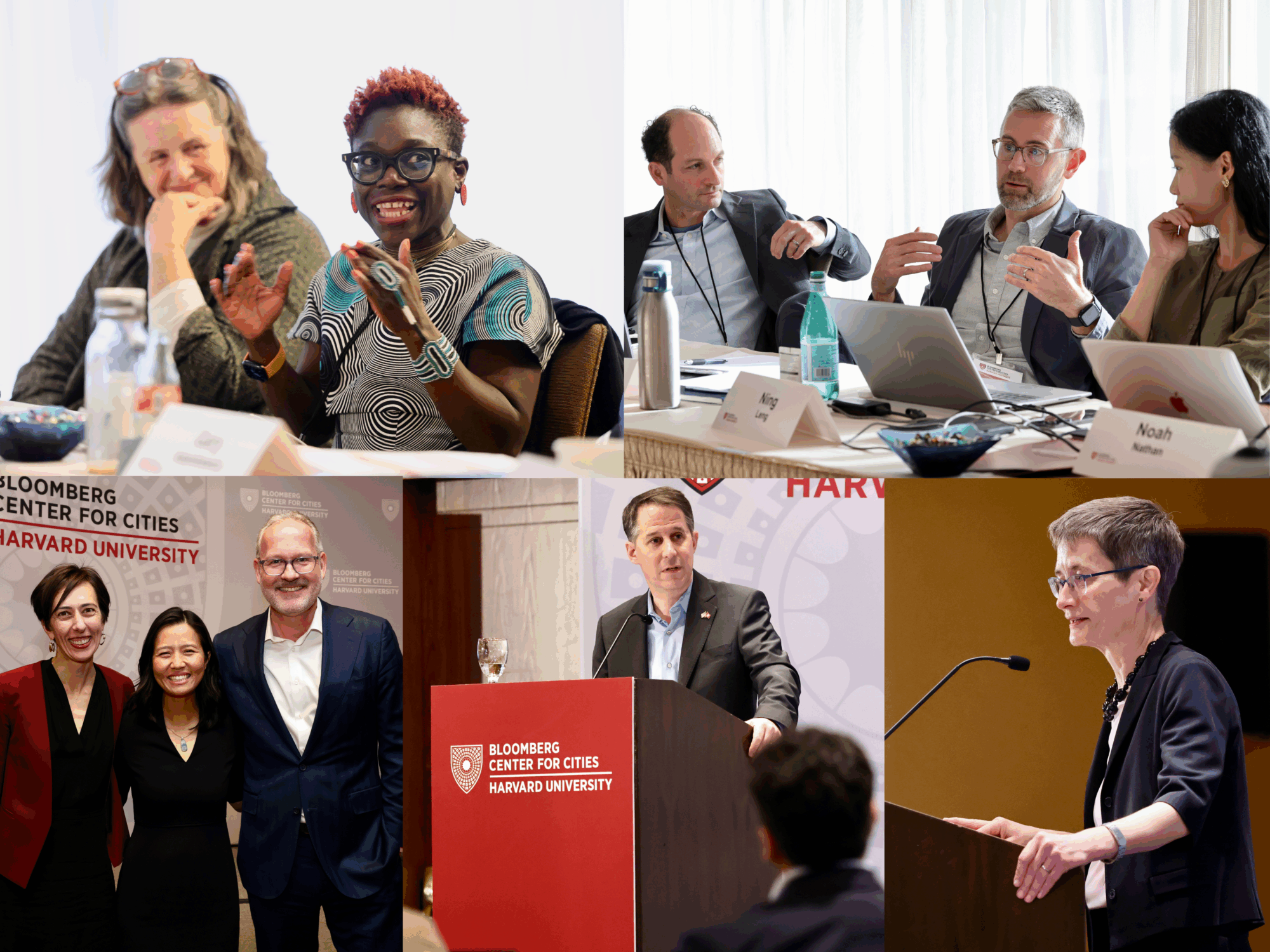
Cambridge, Massachusetts (November 18, 2025)—Last week, the Bloomberg Center for Cities at Harvard University hosted its first Urban Research Conference: Evidence for Problem Solving, bringing together 122 scholars across multiple disciplines from 93 organizations across 15 countries and six continents.
The two-day convening marked a significant milestone in advancing research that helps city leaders and policymakers confront the urgent challenges shaping urban life today.
Participants represented a wide range of disciplines—including public policy and administration, urban planning and design, public health, political science, sociology, and environmental studies—and engaged in workshops, plenary discussions, and informal exchanges designed to foster collaboration across fields and geographies. They shared emerging findings, explored the implications of their work in practice, and developed new partnerships aimed at strengthening the connection between rigorous research and real-world city leadership.
Throughout the event, participants reflected on the shared goal of producing insights to support cities’ capacity for innovation and resilience.
“Politics is at the heart of our most pressing societal challenges, and this is especially true in cities where most of the world now lives,” said Brian Min, Associate Professor in the Department of Political Science at the University of Michigan.
“The workshop track I participated in brought together researchers from across the globe, tackling thorny questions about the drivers of infrastructure investment and service quality across a broad set of cases. Infrastructure is critical to quality of life, but its provision is often tangled with political questions of credit claiming, state capacity, and governance. It was an intellectually invigorating and energizing conference.”
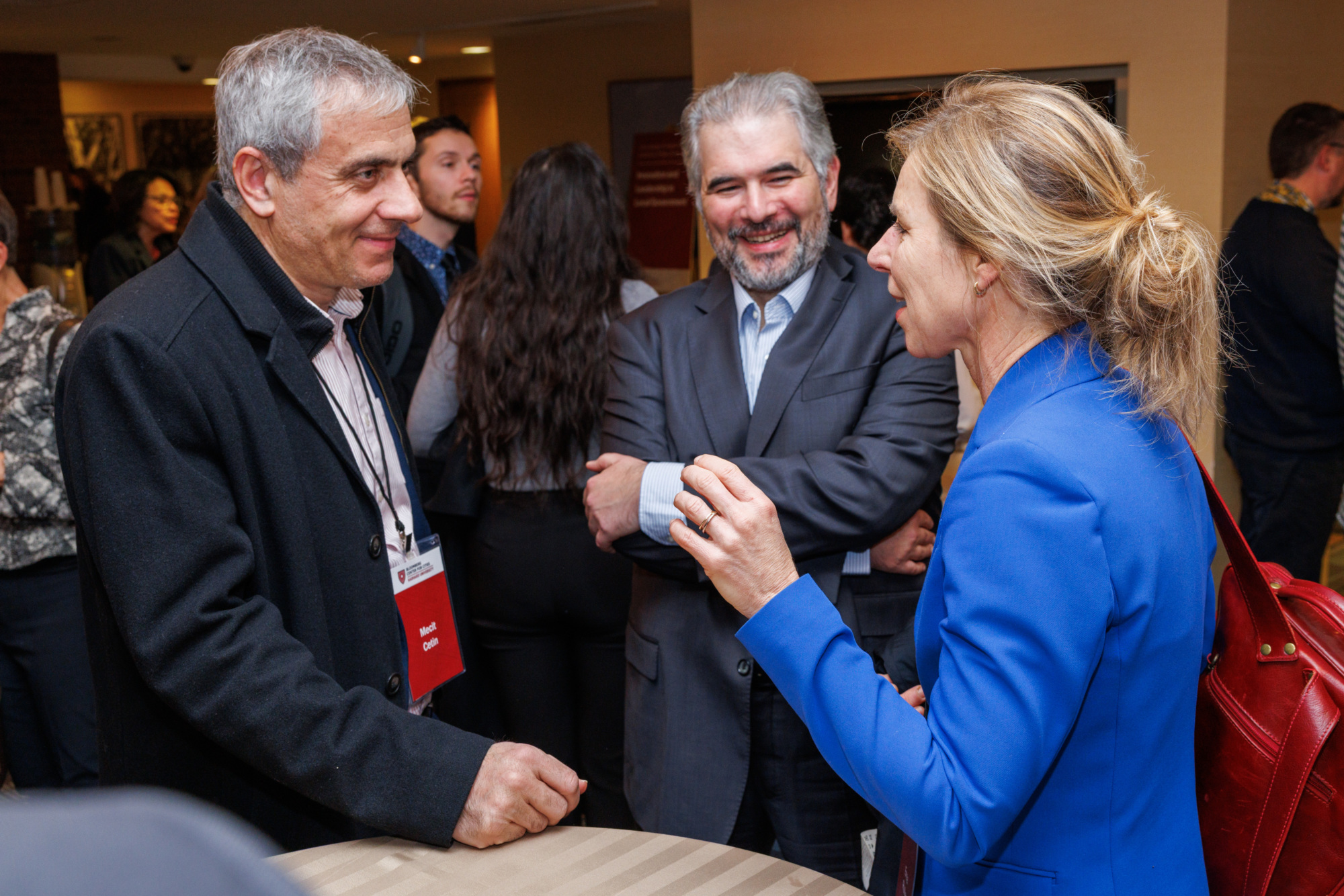
Researchers—including (L to R) Mecit Cetin (Old Dominion University), Emre Cinar (University of Portsmouth), and Erna Ruijer (Utrecht University)—attended the conference from institutions around the world.
“It was an excellent couple of days,” said Cathy Oke, Director of the Melbourne Centre for Cities at the University of Melbourne.
“Our innovation in city leadership sessions were so rich and generous; the majority of the time was given to questions, and really generous academic feedback and discussion. The best thing we can do, as a follow up from this fabulous event, is to establish stronger collaborations between our centers, as this will provide such great and unique opportunities for innovative global city leadership.”
Related Resources
Mayors Extol Possibilities of Local Government at Harvard Panel
A highlight of the conference was a public forum where mayors discussed the benefits of working closely with university researchers to solve pressing challenges. Read the Harvard Crimson’s coverage.Solving Urban Problems: A Conversation with Mayors
Watch the recorded discussion.Bloomberg Center for Cities Launches International Urban Research Conference
Read the conference announcement.
The conference included plenaries focused on how academics and city leaders can work together to generate research that drives real-world change. A panel of researchers discussed what makes collaborations effective and how co-produced knowledge can advance urban problem-solving with moderator Karilyn Crockett, Professor of Urban History, Public Policy & Planning at the Massachusetts Institute of Technology.
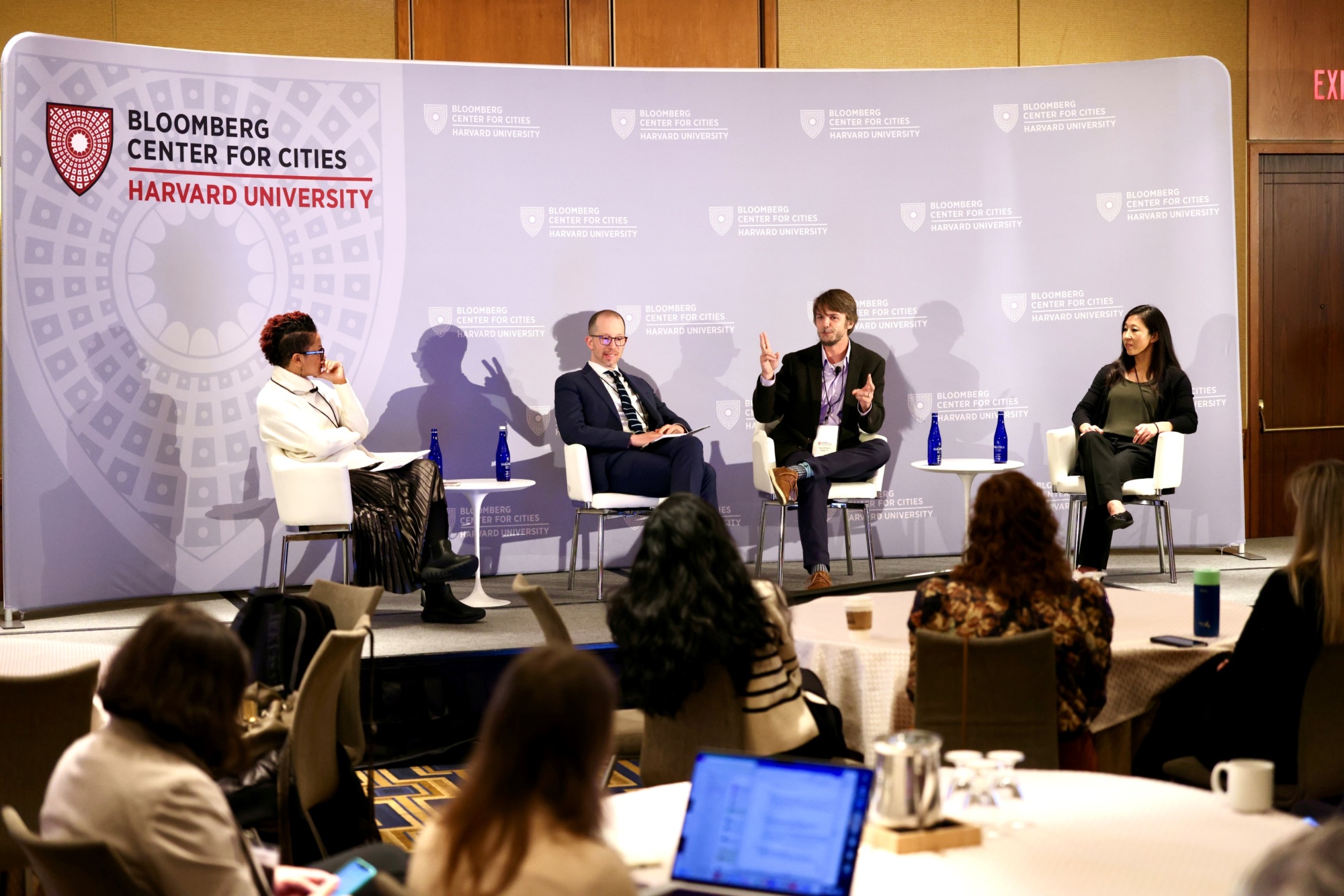
(L to R) Karilyn Crockett of the Massachusetts Institute of Technology moderated a panel on research collaborations with speakers Michael Weintraub (Universidad de los Andes), Daniel O’Brien (Northeastern University), and Jackelyn Hwang (Stanford University).
The closing plenary featured Boston Mayor Michelle Wu in conversation with Center faculty affiliate Alisha Holland, Gates Professor of Developing Societies at the Harvard Faculty of Arts and Sciences. Reflecting on the city’s experience partnering with researchers, Mayor Wu called for more academic engagement in studying how city governments innovate and implement policy—emphasizing leadership, management, and problem-solving as critical yet underexplored areas of urban research.
The conference concluded with renewed commitments to bridge the gap between scholarship and practice, and to continue building a global research community dedicated to improving outcomes for city residents everywhere.
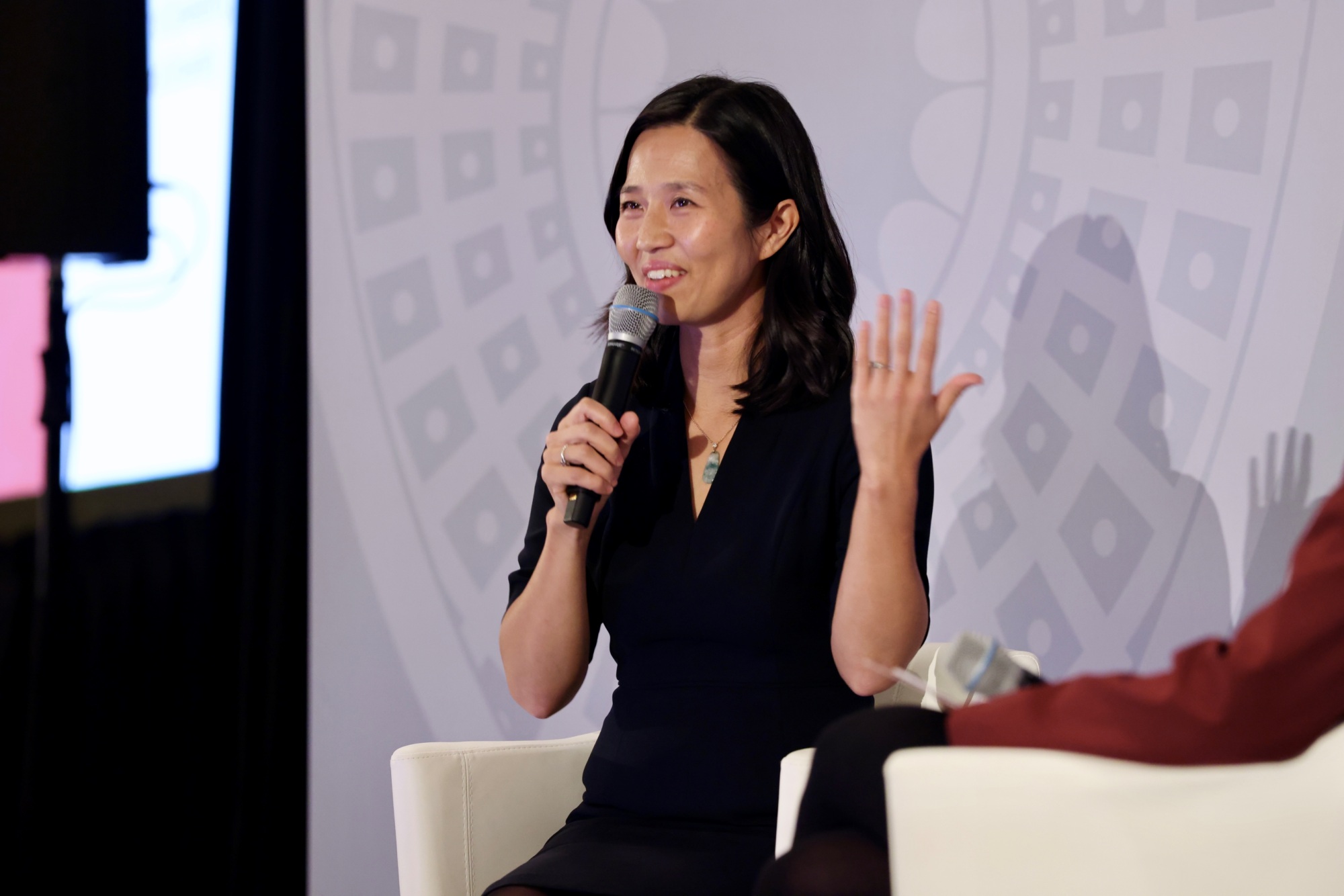
Boston Mayor Michelle Wu spoke to researchers at the conference’s closing plenary session.
“The workshop tracks created a space for scholars to engage deeply with each other’s work, fostering conversations that often crossed disciplinary, methodological, and geographic boundaries,” said Quinton Mayne, Senior Research Director of the Bloomberg Harvard City Leadership Initiative and a conference workshop organizer.
“By structuring the conference around themes central to urban governance and leadership, we helped strengthen networks among researchers whose collective insights can contribute to how cities approach and solve complex challenges.”