
Bloomberg Harvard City Leadership Initiative
The Impact of City-Led Neighborhood Action on the Coproduction of Neighborhood Quality and Safety in Buffalo, NY
International Journal of Environmental Research and Public Health


Responding to important global and local public health challenges, driven by the fact that the majority of the world's inhabitants now live in cities.
Welcome to the Harvard Urban Health Initiative (HUHI), a program of the Bloomberg Center for Cities at Harvard University in collaboration with the Harvard T.H. Chan School of Public Health.
This initiative was created to respond to important global and local public health challenges, driven by the fact that the majority of the globe’s inhabitants now live in cities. Rapid urbanization puts substantial pressures on key sectors such as housing, transportation, sanitation, and employment, especially for the nearly one billion urban poor who live in informal settlements. Health disparities are most notable in global cities and intense urbanization pressures can exacerbate these problems. Urban centers also have unique environmental challenges that extend from the local to global scale. In addition, cities are highly influential drivers of climate change and are also the engines of the most innovative responses to this challenge.
The World Health Organization defines “urban health” as:
“The art and science of improving health and health equity in urban areas, including by securing the resilience and sustainability of health-supporting natural and human systems; more than the sum of its parts, it ensures that people, institutions and environments interact to create healthy situations and that every person has the chance to thrive, now and into the future.”
(Taking a strategic approach to urban health: a guide for decision-makers. Geneva: World Health Organization; 2025.)
Urban health deals with the unique health challenges and issues faced by individuals living in urban areas, including pollution, chronic and infectious diseases, mental health issues, health disparities, violence, substance abuse, and access to healthcare services. Urban health involves various disciplines including public health, medicine, sociology, environmental health, urban planning, and others.
Our initiative aims to bring together Harvard’s community of scholars and students working in these disciplines, along with outside leaders, scholars and practitioners to work together to address these challenges.
Stay in touch: Fill out our interest form.
CONVENE
We convene thought and practice leaders to provide objective guidance on critical urban health issues.
CONNECT
We work to connect decision-makers with scholars and practitioners to facilitate the efficient transfer of knowledge across a range of key topics, from basic clinical and technical information to best practices for assessment, intervention, and evaluation.
CONDUCT
We conduct and promote research between Harvard scholars and beyond, especially novel cross-disciplinary studies that directly inform practice and policy.
CURATE
We serve to identify and curate high-impact scholarship and evidence to translate and disseminate this information for city leaders globally.

Gary Adamkiewicz, Ph.D. MPH
Director, Harvard Urban Health Initiative
Gary Adamkiewicz is Director of the Harvard Urban Health Initiative, and an Associate Professor of Environmental Health and Exposure Disparities at the Harvard T.H. Chan School of Public Health (HSPH), where he leads the Healthy Cities Lab (www.healthycitieslab.org). Dr. Adamkiewicz brings more than 30 years of research and practice experience on the connections between housing and health to these challenges, and on understanding disparities in environmental exposures and health within cities. His research has included landmark studies of environmental risks within public housing and studies that have tested the effectiveness of policies and programs to alleviate these risks. His healthy public housing work has been recognized by the U.S. Secretary of Housing and Urban Development with a national award in 2016. His scholarship has twice been awarded a ‘Paper of the Year’ honor by the American Journal of Public Health. Dr. Adamkiewicz has worked with national, state, and local agencies on projects that aim to reduce the burden of disease from environmental issues and is frequently called upon to provide insight and guidance on these issues. He has trained clinicians and housing practitioners on the factors that shape environmental health risk within homes, and the strategies that can avoid or mitigate these risks. Dr. Adamkiewicz has served as a member of the Science Advisory Committee for the National Center for Healthy Housing and has served on the U.S. Environmental Protection Agency’s Environmental Justice Technical Guidance Review Panel, under the auspices of the agency’s Science Advisory Board. He has also served as an advisor to the World Health Organization’s effort to establish indoor air quality guidelines. Dr. Adamkiewicz holds a Ph.D. in chemical engineering from the Massachusetts Institute of Technology and a Master of Public Health from HSPH.
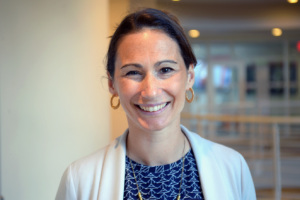
Kate Robb, DrPH MPH
Associate Director
Katharine (Kate) Robb, DrPH, MPH is the Associate Director of the Harvard Urban Health Initiative and a Senior Researcher with the Bloomberg Harvard City Leadership Initiative at the Bloomberg Center for Cities. Her research centers on urban environmental health challenges, including safe housing and access to greenspace, with an emphasis on the leadership skills and organizational structures needed within local governments to turn research into real-world impacts. Her published work has explored health inequalities, neighborhood dynamics, WASH (water, sanitation, and hygiene) in informal settlements, and housing codes. Kate’s work examines how data can be leveraged to develop more effective and equitable responses from city governments, highlighting the importance of collaboration and innovation in tackling complex urban challenges. Kate received her doctorate from the Harvard T.H. Chan School of Public Health. She holds a Master of Public Health in global environmental health from Emory University and a Bachelor of Arts in environmental studies from the University of Michigan.

Bloomberg Harvard City Leadership Initiative
International Journal of Environmental Research and Public Health