
Confronting Extreme Heat, Cities Prepare for a Silent Killer
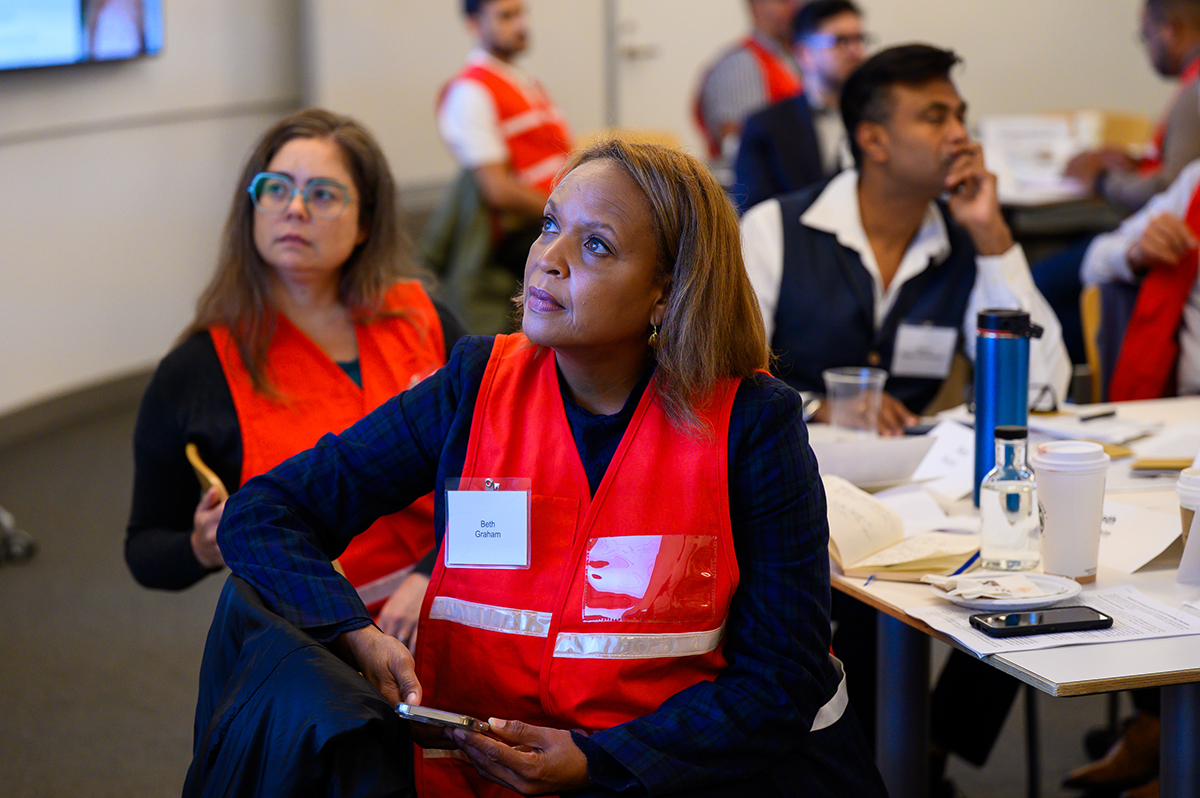
At Harvard’s Climate Action Week, local leaders joined medical and policy experts in a hands-on simulation to test responses and share strategies for protecting residents from the deadliest climate threat in the U.S.
Cambridge, Massachusetts (September 23, 2025)—Extreme heat is the most deadly climate risk in the United States, killing more people than disasters like hurricanes, tornadoes, and floods combined. Mayors and other senior city officials have a critical role to play in preventing these deaths and ensuring the safety of their residents. On September 18, leaders from seven cities across the country came together at Harvard University to participate in a Heat Simulation workshop to share ideas and learn best practices for dealing with this “silent killer.”
The gathering, organized by the team at Data-Smart City Solutions—part of the Bloomberg Center for Cities at Harvard University—in collaboration with CrisisReady, hosted at the Harvard Data Science Initiative, was part of Harvard Climate Action Week 2025, an annual convening sponsored by Harvard’s Salata Institute for Climate and Sustainability. Several cities from Data-Smart’s heat learning cohort sent representatives to simulate a day of extreme heat, based on a case study of the hottest city in the U.S., Phoenix, Arizona.
How Can Cities Use Data to Transform Disaster Response?
Listen to a recent episode of the Data-Smart City Pod with Professor Stephen Goldsmith of Harvard Kennedy School and Dr. Andrew Schroeder of Direct Relief and CrisisReady.
CrisisReady | Phoenix Heat Emergency Simulation
Watch a short video of the heat simulation explaining how it was adapted for leaders in a wide range of city roles.
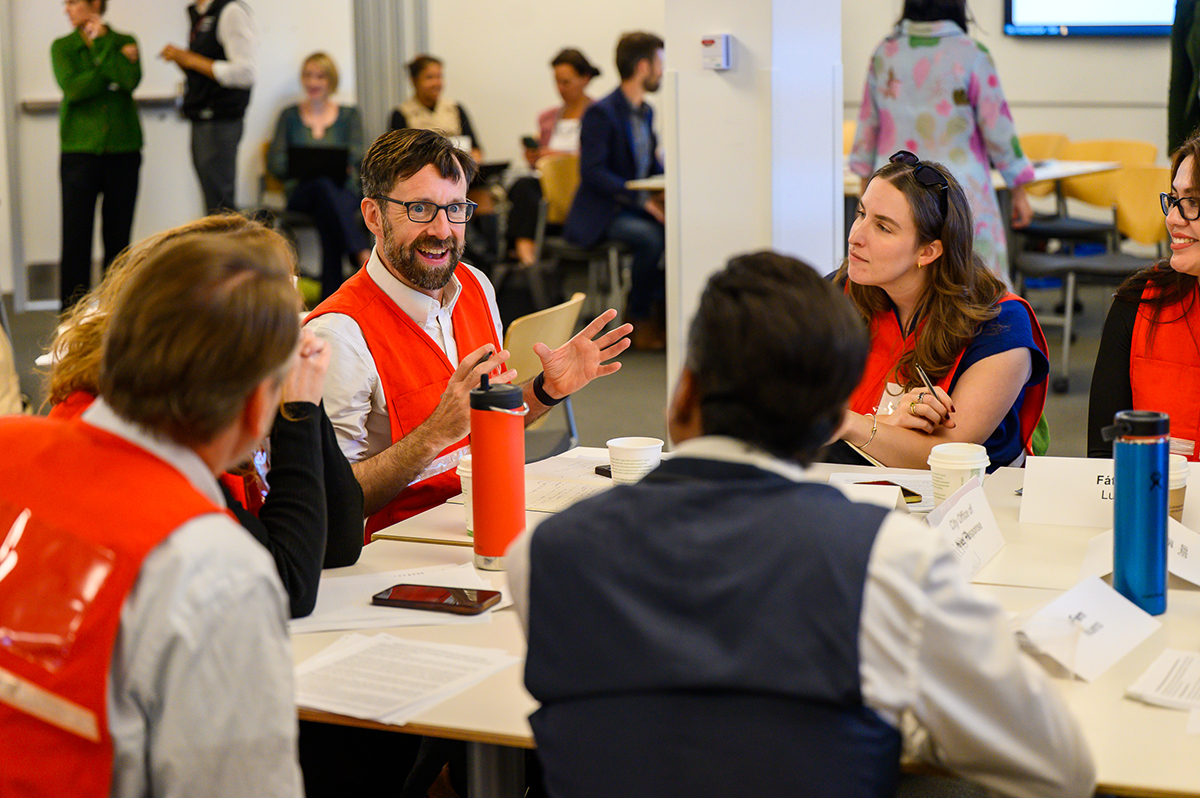
Leaders from seven U.S. cities came together at Harvard University to participate in a Heat Simulation workshop
The 37 city leaders in attendance were assigned to six tables, depending on their role, with each representing a different facet of local government such as Public Works and Utilities or Parks and Transportation. As attendees donned different colored vests to ground themselves in the simulation, Dr. Satchit Balsari of the Harvard Medical School and Beth Israel Deaconess Medical Center, the co-director of CrisisReady, set the morning’s agenda.
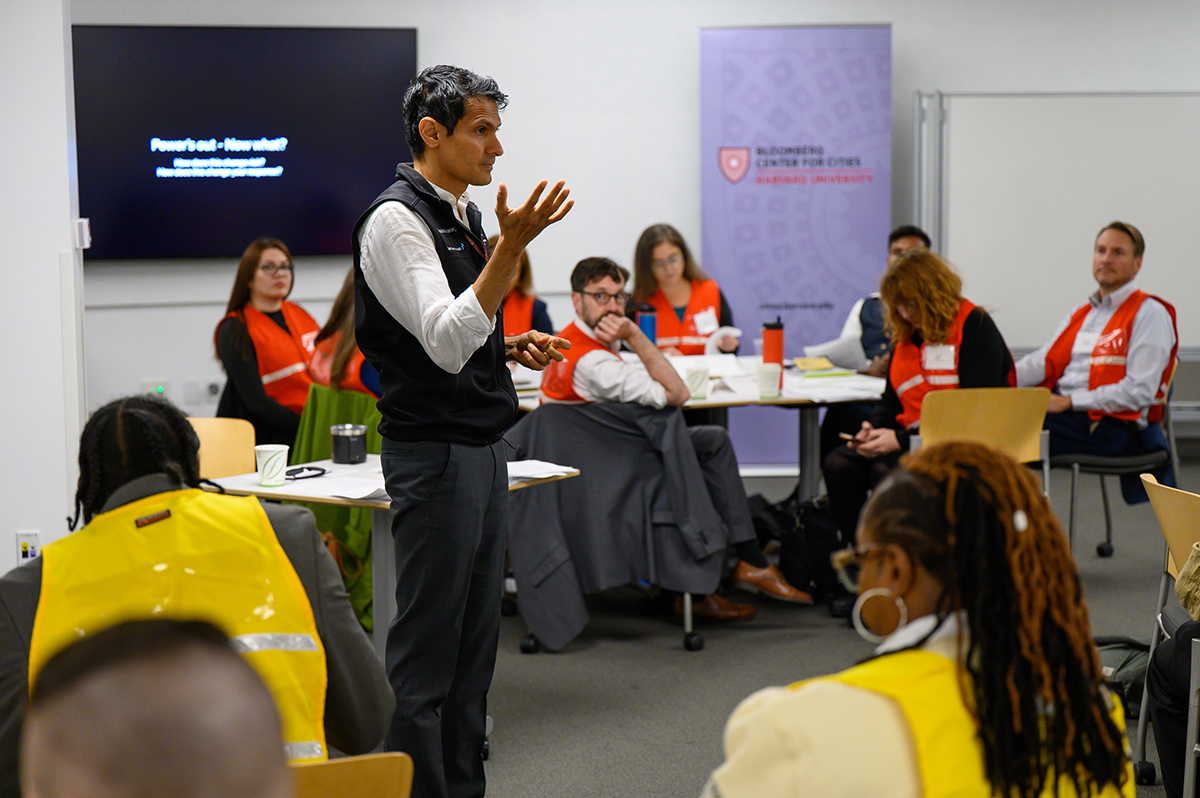
Satchit Balsari —Associate Professor in Emergency Medicine at Harvard Medical School and Beth Israel Deaconess Medical Center; Global Health and Population at the Harvard T.H. Chan School of Public Health; co-director of CrisisReady
This unique first-of-its-kind simulation is based on hundreds of hours of archival news footage from recent heatwaves in Phoenix, AZ, and embeds mini learning modules, moving participants along 29 carefully choreographed sequences combining audiovisual material, breakout groups and quick lessons. Rob Meade, an expert in thermal physiology and fellow at the Salata Institute’s South Asia Cluster, explained how heat and humidity affected human health on various time scales. Professor Caroline Buckee from Harvard Chan described the challenges with ascertaining impact of both heatwaves and the city’s response, and Balsari and emergency room physician and Harvard Medical School faculty Dr. Tess Wiskel guided the team through clinical and public health preparedness.
By expanding the lens used to discuss extreme heat, attendees were able to consider policy updates and new collaborations. For example, Wiskel spoke about needing to use body bags filled with ice to cool patients experiencing heatstroke during heat emergencies. This story prompted cities to reimagine everything from supply chains (how can we make sure there is enough ice?) to EMS response (can our firefighters be prepared to ice patients on-scene?).
In addition to the immediate, urgent need to address heat emergencies, Dr. Balsari challenged participants to think about the longer-term impacts on residents, infrastructure, and utilities. This includes the novel ways that his team are collecting data and measuring heat impacts. Residents with pre-existing conditions can present with medical issues in the days following heat waves, and understanding the cumulative effects of high heat on these patients is crucial. Similarly, programs to assist with energy costs can make the difference between life and death; too often, people won’t run ACs during heat waves due to the additional expense, which has resulted in deaths among elderly or low-income residents.
For the city leaders, this was an invaluable space to learn from top emergency preparedness experts like Bloomberg Center for Cities faculty affiliate Juliette Kayyem of Harvard Kennedy School. Kayyem, an internationally renowned expert on crisis management and homeland security, provided attendees with practical advice including a call to review and update their communications strategies around heat emergencies.
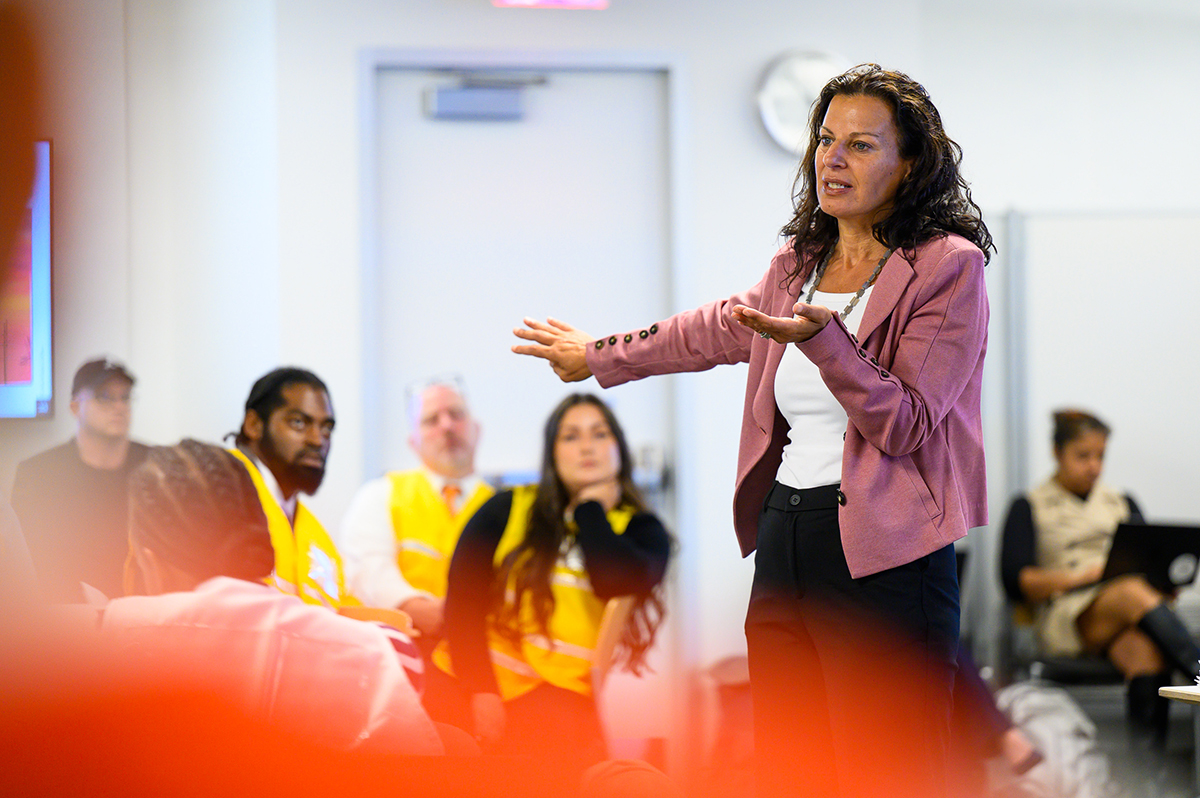
Juliette Kayyem —Robert and Renee Belfer Senior Lecturer in International Security, Harvard Kennedy School; Bloomberg Center for Cities faculty affiliate
City participants also shared their own local governments’ approaches. “I valued the diversity of cities in the room,” said Beth Graham, Director of Stakeholder Engagement of the city of Atlanta Mayor’s Office of Sustainability and Resilience. “To be able to see what other cities are doing for their communities, and how we’re addressing the same root issue customized to the needs of our local community was inspiring but also actionable.”
By expanding how local leaders think about extreme heat, and sharing research and interventions based on this novel framing, attendees were empowered to return to their cities with new drive and ideas.
“I took away a tremendous amount of appreciation for the connection between the research that is happening, and the on-the-ground work, as we all try to protect residents and keep our communities wonderful places to live,” said Chris Osgood, the city of Boston’s Director of the Office of Climate Resilience and Senior Advisor for Infrastructure.
While summer is unofficially over after Labor Day, extreme heat isn’t following the traditional calendar cycle that many residents and city officials used to rely on. Summers are now routinely hotter and longer. Thanks to activities like this heat simulation workshop, attendees are informed and ready to tackle the issue. “We’re going to bring this back to our city, and do a heat simulation in Jacksonville with public utilities, hospitals, everyone around the table,” said Anne Coglianese, the city of Jacksonville’s Chief Resilience Officer, “and when we simulate the power cutting out, we can turn and say, ‘ok, what will we do in this situation?’”