
Making Sense of It All: Using Analytical Tools in Everyday Work
Thinking and acting strategically is central to effective public management. Explore Public Value Theory, which offers tools to help public managers guide inquiry and shape decisions.
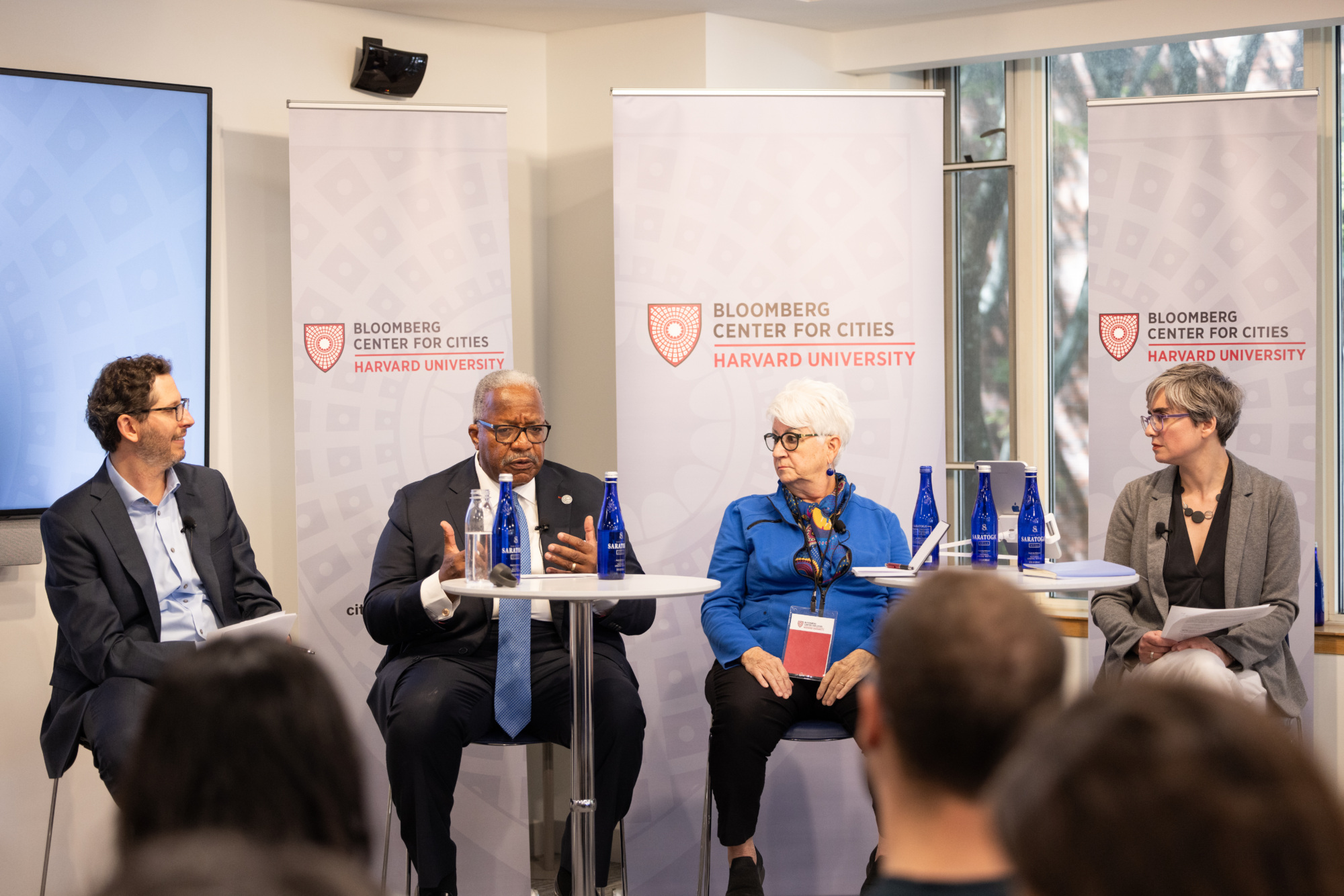
At Harvard’s Bloomberg Center for Cities, experts urged local leaders to prepare for climate migration by strengthening resilience and turning research into local action.
Cambridge, Massachusetts (September 17, 2025)—Leading a city through climate disruptions will require new forms of governance, deeper collaboration, and the ability to turn insights from research into actions to serve community residents. This was the call to action at Rethinking Urban Governance for Climate Mobility, held September 12 at the Bloomberg Center for Cities at Harvard University. Delivering the welcome, Center faculty affiliate Diane Davis, the Charles Dyer Norton Professor of Regional Planning and Urbanism at the Harvard Graduate School of Design (GSD), welcomed the in-person and online audience by underscoring the urgency of preparing leaders for the challenges ahead.
Moderator Hannah Teicher, Assistant Professor of Urban Planning at the GSD, challenged common myths about climate migration, cautioning against alarmist predictions of billions of people crossing borders and underscoring that multiple, intertwined factors drive migration. At the same time, she highlighted startling realities: “Last year, the U.S. set a record, with 11 million residents internally displaced due to natural disasters. Globally, 46 million people were displaced for this same reason, and another 20 million were displaced due to conflict or violence.”
Teicher pointed out nuances sometimes overlooked in public debate. Migration, she emphasized, is a long and difficult process, with hardships arising not only in places left behind but also in transit and destination communities. Newcomers’ arrival can strain existing residents, while climate change also drives movement by businesses—a dynamic she is currently researching. Laying out these complexities, Teicher set the stage for panelists’ insights on governance and leadership under changing conditions.
Mayor Keith James of West Palm Beach, Florida, made clear that for some cities the future is already here. “We watch the climate with bated breath, hoping that a hurricane doesn’t hit us… we are climate vulnerable.” He added, “I have to work each and every day to make us more sustainable, to make us more resilient.” His comments highlighted the need for leadership that simultaneously manages current climate pressures and prepares for future eventualities.
Commissioner Brigid Shea of Travis County, Texas, echoed the theme of preparedness. Framing the mindset as a question, she asked: “What can we do at the local government level to try and minimize the harm to you and your family and neighbors from increasingly destructive and deadly weather?” Shea explained, “Whether people are moving in because of climate concerns, job concerns, et cetera, their needs as new residents of our city remain the same: housing, working, transportation, mobility, affordability.” She added that adaptive governance is as much about inclusive engagement as technical solutions.
Bringing a global lens, David Lubell, Senior Climate Mobility and Cities Fellow at ICLEI – Local Governments for Sustainability, stressed that innovative, anticipatory approaches are emerging in the Global South. He pointed to Bangladesh’s Climate Resilient Migrant Friendly Towns Initiative, which coordinates national government, NGOs, and local communities to strengthen smaller towns so they can absorb internal migrants who might otherwise flood into the capital city, Dhaka. This model combines investment in hard infrastructure with policies that reduce barriers for climate-displaced people and efforts to attract industry and jobs, ensuring towns can support new residents. He also highlighted Fiji’s national program of planned relocation, which he described as equity-driven and locally owned, with the central government supporting — not imposing on — communities. Fiji has already carried out successful relocations of four or five villages, an approach that Lubell said could inform efforts in U.S. cities and regions facing managed retreat.
For Davis, the challenge is fundamentally about governance. “It’s not just about whether migration happens — it’s about how cities choose to lead through it,” she observed. That reflection tied together the panel’s central message: climate mobility will be a defining urban governance issue of the coming years, and leaders must act with urgency.
The audience, both in the room and online, pushed the conversation further. Questions ranged from how housing policy can be reimagined for future arrivals to whether infrastructure funding can keep pace with climate pressures to the ethical responsibilities of receiving communities. The breadth of concerns reflected the reality that leadership requires navigating competing priorities while keeping community listening, inclusion, and resilience at the center.
The panel closed with a call to action, acknowledging that leadership in the age of climate mobility means being willing to prepare before a crisis is fully upon cities. The discussion left participants with evidence that building adaptive, inclusive, and networked systems of governance is not optional. It is the work of leading cities through a future already unfolding.
What can we do at the local government level to try and minimize the harm to you and your family and neighbors from increasingly destructive and deadly weather?– Travis County, Texas Commissioner Brigid Shea
Thinking and acting strategically is central to effective public management. Explore Public Value Theory, which offers tools to help public managers guide inquiry and shape decisions.